SADC PF pledges action as Youth present Windhoek Declaration
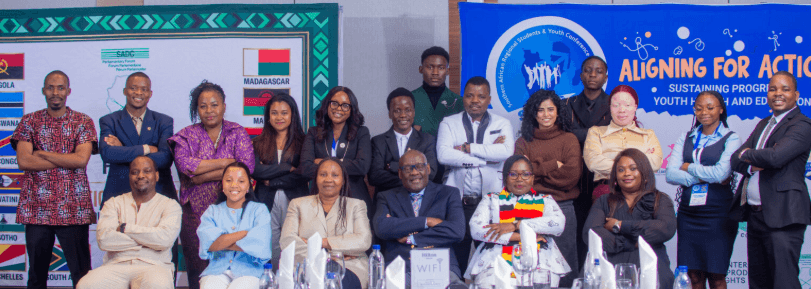
WINDHOEK, NAMIBIA – Young people in Southern Africa must be treated as partners capable of generating evidence, shaping solutions and holding decision-makers accountable, speakers said in Windhoek ahead of the handover of the SARSYC VI Windhoek Declaration.
Speaking during the official closing ceremony of the Sixth Southern African Regional Students and Youth Conference (SARSYC VI) on 7 August 2026, SAYWHAT Executive Director and SARSYC Convener Mr Jimmy Wilford and SADC Parliamentary Forum Secretary General Ms Boemo Sekgoma called for a shift from declarations and dialogue to implementation, accountability and measurable results.
Mr Wilford said the conference represented the latest chapter in a 12-year journey in which young people had consistently challenged the notion that decisions affecting their lives could be made without their meaningful participation.
“What you have seen is a journey of young people refusing to accept that decisions about their lives should be made without them,” he said.
He said what distinguished the Windhoek conference was its emphasis on “action, implementation and accountability.”
Mr Wilford highlighted the Regional Research Indaba, where young researchers, students and practitioners presented evidence and proposed solutions across five thematic areas: education rights and equity; HIV and sexual health; non-communicable diseases and healthy lifestyles; digital health and safety; and mental health and substance abuse.
“Young people not only identified problems, but presented evidence-based solutions,” he said and added that the deliberations demonstrated that “effective policy begins with credible evidence.”
The conference also launched the second edition of the SADC Regional Perspective by Young People on emerging issues, a compilation of research papers presented during SARSYC V.
Other platforms at SARSYC VI examined the interconnected challenges confronting girls, young women and young men.
Through the Southern African Web for Life Girls Network Symposium, young women explored barriers that push girls out of learning spaces as well as threats to their physical, mental, emotional and digital wellbeing.
The Mugota/Ixhiba Young Men’s Forum, meanwhile, confronted suicide, substance abuse, betting addiction and sexual health challenges affecting young men. Namibia’s Deputy Minister of Education, Innovation, Youth, Sports, Arts and Culture, Hon. Dino Ballotti, encouraged participants to ensure that the boy child was not left behind.
Mr Wilford said the Alliance Building Labs demonstrated the potential of regional solidarity and cross-border partnerships, drawing lessons from initiatives including the GEAR Alliance, SHE SOARS and the Kuyenda Collection.
Through the Students Talks and Engagement with Policy Makers and Partners (STEPP) platform, young people also sat alongside parliamentarians, development partners and sector leaders to explore practical approaches to wellbeing, educational equity, gender equality, digital safety and adolescent health.
Mr Wilford urged decision-makers to take the resulting recommendations seriously, arguing that the authority of young people’s voices rested on evidence and lived experience.
“Let us trust the voices that have filled these rooms over the past two days. Not because they are young, but because they are informed. Not because they represent the future, but because they understand the present,” he said.
He stressed that challenges such as unemployment, mental health, digital risks, gender inequality, substance abuse, social exclusion and barriers to health and education were not abstract policy questions for young people.
“They are lived experiences,” he said.
Mr Wilford said the young delegates had gone beyond identifying problems by bringing research, innovation, evidence and practical recommendations to the table.
“The success of our region will not be determined by how often we speak about youth participation. It will be determined by how willing we are to trust young people’s ideas, invest in their leadership, and work with them as equal partners in building the Southern Africa we all want to see,” he said.
Mr Wilford said the conference represented the latest chapter in a 12-year journey in which young people had consistently challenged the notion that decisions affecting their lives could be made without their meaningful participation.
“What you have seen is a journey of young people refusing to accept that decisions about their lives should be made without them,” he said.
He said what distinguished the Windhoek conference was its emphasis on “action, implementation and accountability.”
Mr Wilford highlighted the Regional Research Indaba, where young researchers, students and practitioners presented evidence and proposed solutions across five thematic areas: education rights and equity; HIV and sexual health; non-communicable diseases and healthy lifestyles; digital health and safety; and mental health and substance abuse.
“Young people not only identified problems, but presented evidence-based solutions,” he said and added that the deliberations demonstrated that “effective policy begins with credible evidence.”
The conference also launched the second edition of the SADC Regional Perspective by Young People on emerging issues, a compilation of research papers presented during SARSYC V.
Other platforms at SARSYC VI examined the interconnected challenges confronting girls, young women and young men.
Through the Southern African Web for Life Girls Network Symposium, young women explored barriers that push girls out of learning spaces as well as threats to their physical, mental, emotional and digital wellbeing.
The Mugota/Ixhiba Young Men’s Forum, meanwhile, confronted suicide, substance abuse, betting addiction and sexual health challenges affecting young men. Namibia’s Deputy Minister of Education, Innovation, Youth, Sports, Arts and Culture, Hon. Dino Ballotti, encouraged participants to ensure that the boy child was not left behind.
Mr Wilford said the Alliance Building Labs demonstrated the potential of regional solidarity and cross-border partnerships, drawing lessons from initiatives including the GEAR Alliance, SHE SOARS and the Kuyenda Collection.
Through the Students Talks and Engagement with Policy Makers and Partners (STEPP) platform, young people also sat alongside parliamentarians, development partners and sector leaders to explore practical approaches to wellbeing, educational equity, gender equality, digital safety and adolescent health.
Mr Wilford urged decision-makers to take the resulting recommendations seriously, arguing that the authority of young people’s voices rested on evidence and lived experience.
“Let us trust the voices that have filled these rooms over the past two days. Not because they are young, but because they are informed. Not because they represent the future, but because they understand the present,” he said.
He stressed that challenges such as unemployment, mental health, digital risks, gender inequality, substance abuse, social exclusion and barriers to health and education were not abstract policy questions for young people.
“They are lived experiences,” he said.
Mr Wilford said the young delegates had gone beyond identifying problems by bringing research, innovation, evidence and practical recommendations to the table.
“The success of our region will not be determined by how often we speak about youth participation. It will be determined by how willing we are to trust young people’s ideas, invest in their leadership, and work with them as equal partners in building the Southern Africa we all want to see,” he said.
(Full article on link attached below)
Attending SARSYC VI?
Register when registration opens to secure your spot at the premier regional youth conference.
RegisterStay Informed
Subscribe to receive the latest SARSYC VI news and updates.